The short answer
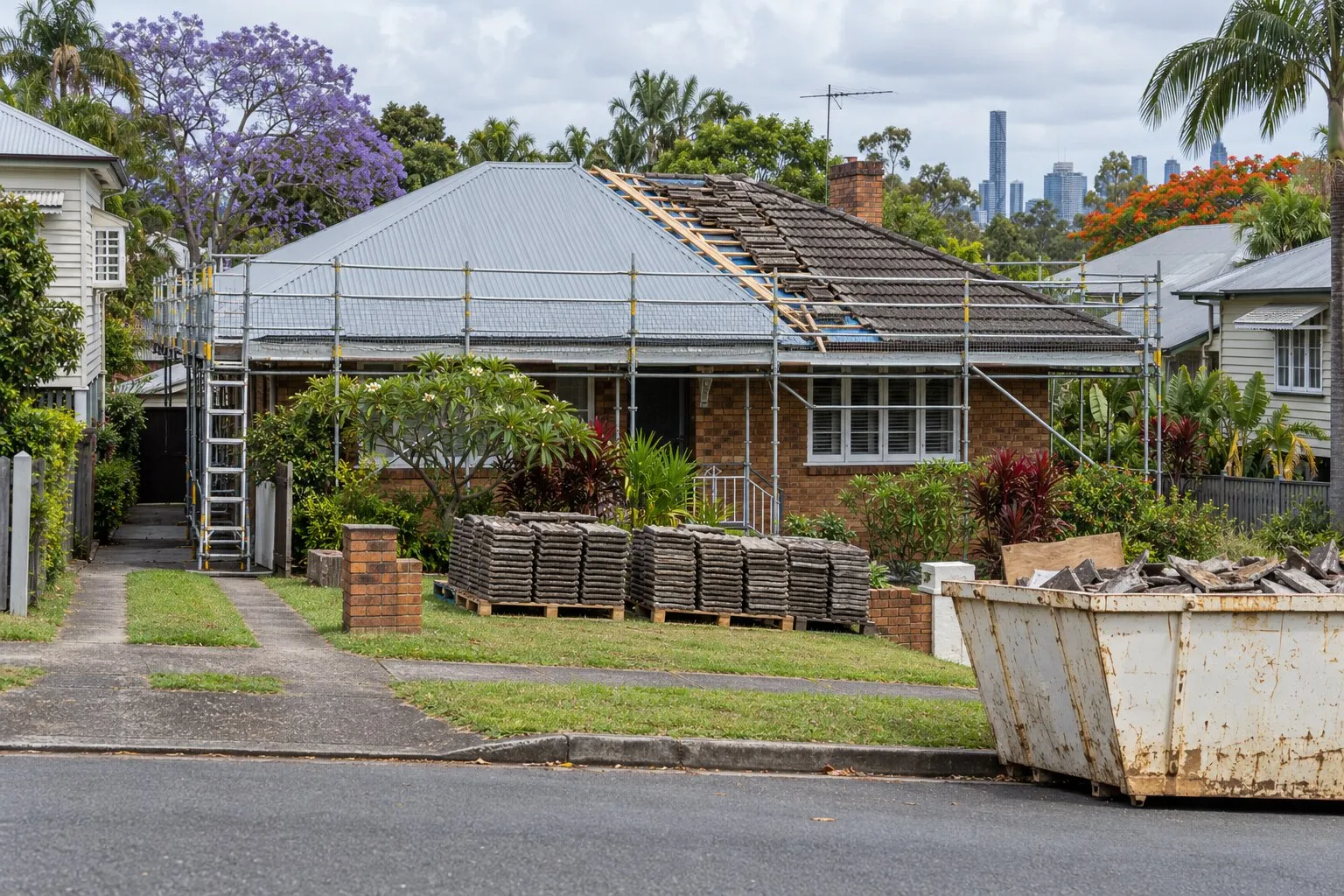
It can, and for a whole roof it’s a question to settle with a building certifier before work starts. Queensland’s Building Regulation 2021 treats repairs that affect structural parts as accepted (self-assessable) work only when they affect no more than “20% of the building’s structural components of the same type”, and the QBCC says it’s the home owner’s responsibility to have the right approvals in place. Character houses in Brisbane can also need Council planning approval. Over $3,300, the roofer needs a QBCC licence, a written contract and home warranty insurance.
The 20% rule for roof work in the Building Regulation
Under the Building Regulation 2021, some building work doesn’t need a building approval. Schedule 1, “Accepted development (self assessable)”, covers repairs and maintenance that don’t touch structural components (section 7), and repairs that affect only minor structural components within limits (section 8). The limit that matters for a roof:
When roof work needs building approval: what the sources say
| Source | What it says |
|---|---|
| Building Regulation 2021, schedule 1, s 8(2)(a) | Accepted only “if the building work does not affect more than 20% of the building’s structural components of the same type”. |
| Building Regulation 2021, schedule 1, s 8(3) | A minor structural component includes “a roof beam or lintel supporting no more than 5m2 of roof area”. |
| Brisbane City Council severe-weather fact sheet | Building approval (BA) for “Substantial repairs to structural and non-structural framing members (more than 20% to structural and non-structural framing members).” |
| City of Gold Coast (another council, not Brisbane) | Says building approval is needed when roofing work replaces more than 20% of the existing roof area, including a roof replaced for age or under an insurance claim. |
Building Regulation 2021, version in force from 14 August 2026; Brisbane City Council severe weather fact sheet, March 2025; City of Gold Coast building approval page, undated. Checked 22 October 2026. The regulation counts structural components of the same type, not roof area; the Gold Coast wording is that council’s own.
Business Queensland adds that for accepted development “the owner is responsible for ensuring the work complies with applicable standards, including structural sufficiency, size limits and boundary setbacks.” Patching a few storm-damaged sheets is a different job from a re-roof, and the roof leak guide covers it.
Building certifiers, and who gets the approval
A private building certifier assesses and approves building work and inspects it. Business Queensland says certifiers “can also advise whether a building approval is needed, as some minor building work may not require an approval”. They “must not design the building or carry out any of the work”, and they must hold a QBCC licence.
The QBCC puts the responsibility on you: “It’s your responsibility as a home owner to make sure the right building approvals are in place before work starts—even if you’ve hired a builder.” It adds: “Usually, your builder will engage a certifier on your behalf. However, you can choose to appoint a certifier directly.”
Character houses can need Council approval too
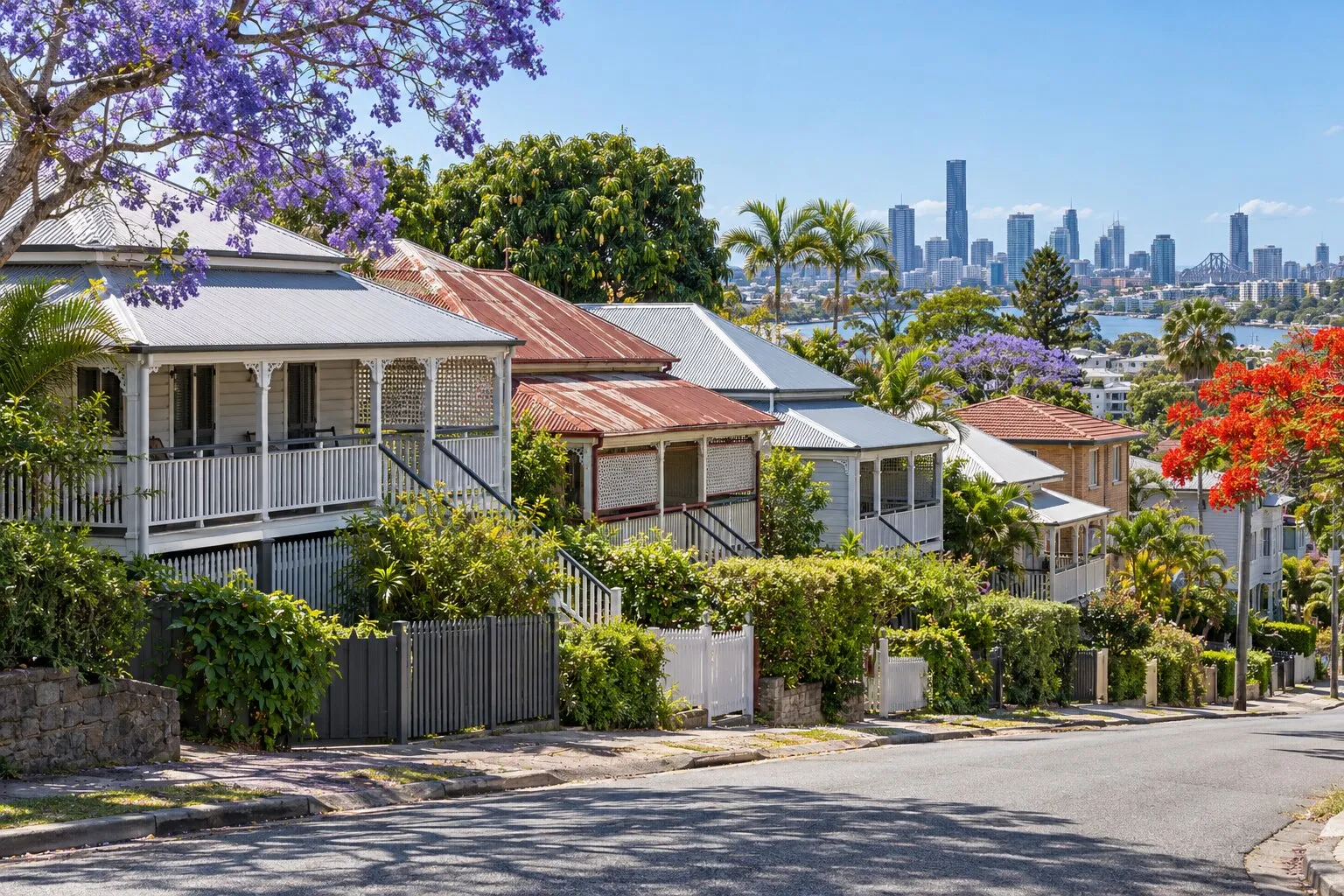
Business Queensland says some aspects of domestic building work, “such as maximum height, setback or character of a building”, may be controlled by a council planning scheme, and then “a planning permit is required from the local government.” In Brisbane that means the character overlays: see re-roofing a Queenslander.
Roof tie-down when you re-roof an older house
Tie-down is what holds the roof on in a storm: the straps, bolts and screws connecting the roof sheets to the battens, the battens to the rafters, and the rafters to the walls. A Queensland Government fact sheet for its cyclone-coast resilience program (which doesn’t cover Brisbane) explains the problem with older houses: “Homes built before the current building code came into effect were generally nailed together. The new building code has upgraded these tie-downs for weak points of the structure by a combination of steel strapping, mechanical fixings, and steel tie-down systems.”
A re-roof is the one time those connections are exposed. Brisbane City Council’s fact sheet, on repairs to structural framing, says to “Contact your builder or certifier who can calculate this and recommend which building standards the repairs should comply with.”
- Our advice: ask each roofer how they’ll check the battens and the batten-to-rafter and rafter-to-wall connections once the old roof is off.
- Ask what tie-down upgrade is in the price, what’s an extra, and whether the certifier will inspect it.
- Get the answer in the written scope, so quotes can be compared like for like.
QBCC roofing licence: the $3,300 threshold and licence classes
The QBCC says you need a contractor licence for building work “valued over $3,300”. For roofs, the class matters:
- Roof and wall cladding covers metal roofs: “Select and install roof cladding other than terracotta and concrete roof tiles”, plus flashings, rainwater goods, skylights and ventilators.
- Roof tiling covers tiles: “Cut and fix roof tiles”, and “Bedding, pointing and installing of associated flashing”.
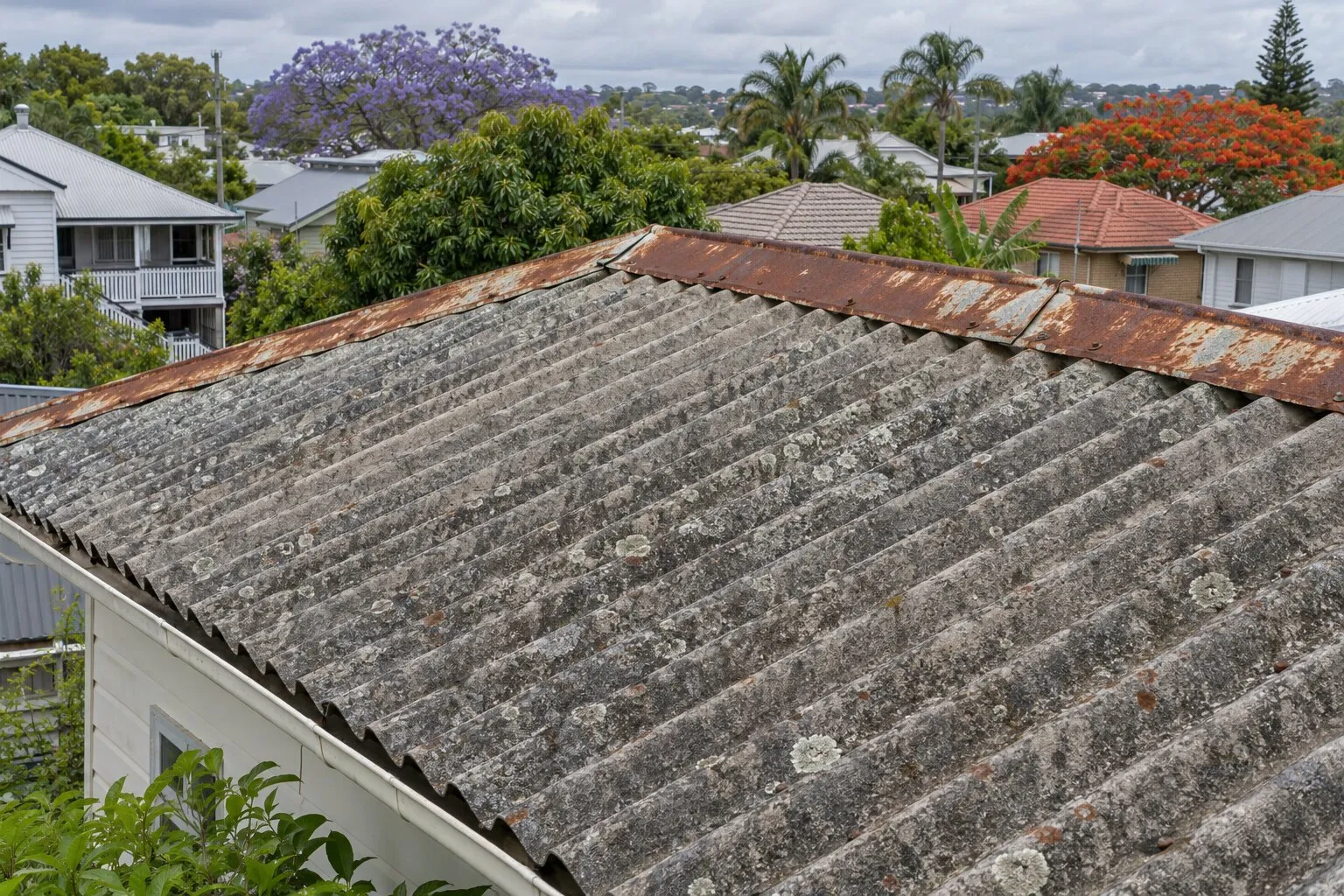
- Both classes cover “Refurbish and maintain roofs, excluding painting roofs”. Painting needs a painting class, and removing an asbestos roof needs an asbestos removal licence (see the asbestos roof guide).
Written contracts, deposits and cooling-off for a re-roof
The QBCC says “You need a written contract if you’re carrying out domestic building work priced over $3,300 including labour, materials and GST.” The contract level and the most the roofer can ask as a deposit depend on the price:
QBCC contract and deposit rules by contract price
| Contract price | Contract | Maximum deposit |
|---|---|---|
| $3,300 or less | Small building projects contract (QBCC template “Priced up to $3,300”) | 20% |
| $3,301 to $19,999 | Level 1 renovation, extension and repair contract; you get a signed copy within 5 business days | 10% of the contract price |
| $20,000 and over | Level 2 renovation, extension and repair contract; the QBCC consumer building guide comes before you sign | 5% of the contract price |
QBCC domestic building contracts page (last reviewed 26 June 2024) and deposits and progress payments page (last reviewed 27 June 2025), checked 22 October 2026. The contracts page says level 2 is “$20,000 and over”; the deposits page says “more than $20,000”. A larger deposit of up to 20% is allowed only where off-site prefabrication is more than half the contract price.
Progress payments must keep pace with the work: the QBCC says “the contractor can’t claim more than 50% of the contract price, including the deposit, until at least 50% of the work onsite has been completed.” And “All contracts for building work valued at over $3,300 must include advice about your right to a ‘cooling-off’ period.”
Queensland Home Warranty Scheme cover on a new roof
Home warranty insurance is “compulsory for all residential construction work valued at more than $3,300 (including cost of materials, labour and GST)”. The contractor collects the premium from you as part of the contract and pays it to the QBCC before work begins. The QBCC says the cover “lasts for 6 years and 6 months” and “pays up to a maximum of $200,000 on claims”.
Two things protect your cover. “If your project will cost more than $3,300 (including labour, materials and GST), make sure the home warranty insurance premium is included in each quote so you can compare accurately.” And don’t overpay the deposit: “If you pay more than the lawful deposit, you will not be entitled to recover the excess you have paid in the event you need to make a claim under the Queensland Home Warranty Scheme for refund of deposit.”
Common questions
Do I need approval to replace roof sheets after a storm?
It depends on how much is replaced. Brisbane City Council’s severe-weather fact sheet lists “Minor like-for-like repairs to non-structural external cladding” as needing no approval, and building approval for substantial repairs to more than 20% of framing members. Ask a certifier if the job is in between.
How do I check a roofer’s QBCC licence?
Search their name or licence number on the QBCC licensee register, and check that the licence is current and in the right class for the roof (cladding for metal, tiling for tiles). The name on the contract should match the licence.
Can I get out of a roofing contract after I sign it?
For contracts over $3,300, the QBCC says “you generally have the right to withdraw from the contract during a cooling-off period of five (5) business days”, starting the day after you receive a signed copy. You withdraw by written notice, and the roofer is usually entitled to $100 plus reasonable out-of-pocket expenses.
Does replacing the roof with the same material still need approval?
It can. The 20% limit counts structural components, not the roofing material, so using the same sheets or tiles doesn’t settle it by itself. Like-for-like matters more for Council planning approval on character houses. A certifier can tell you for your roof.
Who pays for the certifier?
Ask each roofer whether the certifier’s fee is in their quote. If you appoint a certifier yourself, Business Queensland says the agreement must be in writing and state the certification fee.
Is a roof under $3,300 covered by home warranty insurance?
The QBCC says the premium is compulsory for residential work valued at more than $3,300, so a smaller job may not carry it. Ask the roofer, and keep the written agreement and invoice.
Where this information comes from
The prices, rules and advice on this page come from these published pages, checked on 22 October 2026.
- Building Regulation 2021 (Qld), schedule 1, sections 7 and 8 · Queensland legislation, version in force from 14 August 2026
- Business Queensland: when you don’t need building approval · Queensland Government, last reviewed 23 June 2022
- Business Queensland: role of building certifiers · Queensland Government, last reviewed 14 July 2026
- Brisbane City Council: severe weather fact sheet, repairing or rebuilding dwelling houses · Brisbane City Council fact sheet, March 2025
- City of Gold Coast: do your building works need approval? · City of Gold Coast council web page (not Brisbane), undated
- Queensland Government: Household Resilience Program, roof replacement fact sheet · Queensland Government program fact sheet for Central and North Queensland, effective June 2026
- QBCC: building approvals and certification · Queensland Building and Construction Commission, last reviewed 17 April 2025
- QBCC: when you need a licence · Queensland Building and Construction Commission, last reviewed 11 August 2021
- QBCC: roof and wall cladding licence class · Queensland Building and Construction Commission, 31 August 2021
- QBCC: roof tiling licence class · Queensland Building and Construction Commission, 31 August 2021
- QBCC licensee register · Queensland Building and Construction Commission’s public register
- QBCC: domestic building contracts · Queensland Building and Construction Commission, last reviewed 26 June 2024
- QBCC: deposits and progress payments · Queensland Building and Construction Commission, last reviewed 27 June 2025
- QBCC: cooling-off period · Queensland Building and Construction Commission, last reviewed 27 June 2025
- QBCC: what is home warranty insurance · Queensland Building and Construction Commission, last reviewed 11 May 2025